Our Approaches and Interventions
We use various evidence-based approaches and intervention strategies to address a range of developmental, behavioral, and learning challenges in children, with the focus on building skills for independence, communication, and social engagement.
Applied Behaviour Analysis (ABA)
Applied Behaviour Analysis (ABA) is a therapeutic approach for children with autism and other developmental conditions. It focuses on reinforcing positive behaviours and reducing negative behaviours through structured interventions.
ABA involves breaking down complex skills into smaller, manageable steps, tracking them consistently over time, and applying visual management and strategic tools to address these challenges.
We use positive reinforcement, through which we build a behavioural pattern in the child by providing them a reward, to encourage and strengthen desirable behaviours. Ultimately, ABA is highly individualized to meet the unique needs of each child and is effective for placements in both one-on-one and group settings.
Autism Rehabilitation or Autism Therapy
Autism rehabilitation is a comprehensive, customized approach to supporting children with Autism Spectrum Disorder (ASD) in their development. It focuses on enhancing a variety of abilities that are essential for independence, social integration, and day-to-day functioning. Autism rehabilitation aims to give kids the skills they need to successfully navigate their surroundings, communicate, and build lasting connections.
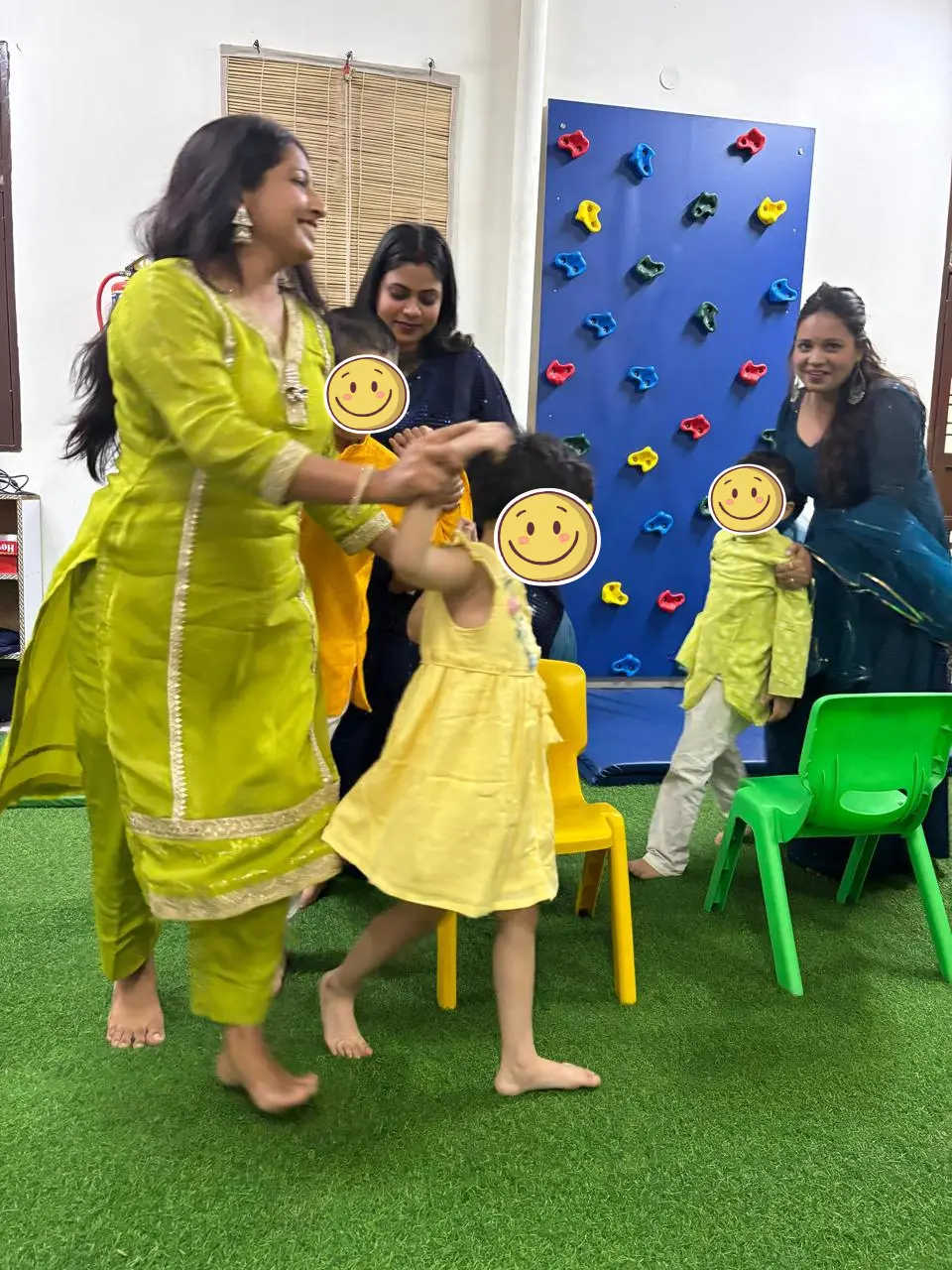
Play and Group Therapy
A therapeutic approach that uses play and group interactions to help children express feelings, develop social skills, and problem-solving skills in a supportive setting. Children engage in activities, such as art, games, drama, and role-plays, under trained professionals; through these activities, they observe others, improve communication, build self-esteem, resolve conflicts, and interact better with peers and the environment. This approach is beneficial for emotional and behavioral challenges, managing disabilities, and enhancing overall well-being.
Sensory Integration
An approach used to improve how the brain processes and responds to sensory information. Children with sensory processing issues might struggle to filter and respond to sensory stimuli from their surroundings, leading to behaviors like avoidance or withdrawal. Through structured activities, sensory integration therapy helps children regulate their sensory responses, improving their ability to engage with the world around them. This approach is beneficial for building a foundation of emotional boundaries by encouraging them to experience sensory stimulation in a safe, controlled manner.
Handwriting Without Tears
An intervention that uses a multisensory approach to teach children how to write focusing on improving motor skills and making writing easier. It was developed to help children struggling with handwriting or developmental disabilities. The program incorporates tools such as music, activities, and visual cues to help children develop proper grip, letter formation, and writing fluency. It helps integrate visual and motor coordination using easy-to-learn, step-by-step components, which enhances their handwriting and the overall writing experience.
TEACCH (Treatment and Education of Autistic and Communication-Handicapped Children)
A systematic approach designed for children with autism to promote independence using structured environments. This method relies heavily on visual cues to make the environment more manageable to them, which reduces their anxiety and improves understanding of their tasks and surroundings. TEACCH method uses individualized learning programs tailored to a child's unique needs, interests, and learning style rather than a strict standardized curriculum. It fosters communication and independence, helping give kids a sense of security and empowering them to navigate their daily lives more easily and comfortably.
Parent-Implemented Approaches
Strategies that empower parents to provide particular interventions for their child in a natural environment. We train parents on structured approaches, like Parent-Child Interaction Therapy (PCIT), which involves parents consistently using specific strategies and techniques to enhance communication and emotional control during everyday routines at home. These approaches provide parents with the skills and confidence they need to effectively handle difficult behaviors and build a positive, supportive relationship with their child. Children receive consistent support at home, which leads to improvements seen in the child's optimal process, which promotes greater long-lasting developmental and learning outcomes.
Visual Supports and Schedules
Using visual aids to help children understand rules, routines, and expectations. Visual supports involve stories, schedules, and choice boards. Children with autism or communication impairments particularly benefit from this method since it reduces anxiety about transitions and makes overall communication more accessible and understandable. By offering a consistent and understandable framework, visual schedules help individuals manage their activities, understand behavioral expectations, and anticipate events, improving cognition and increasing communication. Visual routines display tasks children are expected to complete, and help aid children process and respond more positively. It is a vital tool for social communication, fostering independence.
Montessori Method
A child-centered approach that promotes independence, self-directed learning, and hands-on activities. Our therapists integrate Montessori concepts and tools into your child's intervention environment. This method is particularly useful for encouraging development in multiple areas of life. It provides individualized learning experiences that foster cognitive, motor, and social skills. The materials designed are developmentally appropriate and attractive. They promote problem-solving, creativity, and self-expression, allowing children to build confidence, develop independence, and achieve their full potential.
Cognitive Behavioral Therapy (CBT)
A therapeutic approach that focuses on understanding the connection between thoughts, feelings, and behaviors. By identifying and changing negative thought patterns, it helps children recognize how their thoughts influence their feelings and behaviors and teaches them how to challenge and reframe these thoughts to develop healthier coping mechanisms. CBT utilizes positive problem-solving and emotion regulation to approach thinking models. Effective for children dealing with anxiety, depression, ADHD, and other emotional challenges. This approach empowers children to manage their emotions and behaviors more effectively, leading to improved mental well-being and resilience.
RDI (Relationship Development Intervention)
A family-based program designed to address the core symptoms of autism. It focuses particularly on children with Autism Spectrum Disorder (ASD). It focuses on enhancing the child's ability to form meaningful relationships and engage in reciprocal interactions with others. RDI emphasizes guiding children through flexible experiences and fostering dynamic communication, helping them develop empathy and communication skills. The program encourages parents to actively participate by modeling and supporting those interactions, ultimately promoting greater emotional connection, independence, and social competence in children with ASD.
Speech-Language Therapy (SLT) Approaches
A range of methods intended to help kids become better communicators. These methods concentrate on improving vocabulary, articulation, social interaction, and language development using diverse strategies. Children with limited verbal communication may use tools, sign language, or an Augmentative and Alternative Communication (AAC) system, which enables them to communicate using technological gadgets, visual aids, or various other strategies. SLT involves increasing vocabulary, improving grammar and social interactions, and improving speech intelligibility. Speech language therapy (SLT) helps kids acquire the abilities necessary to interact with everyone in a meaningful way, communicate effectively, and express their ideas and feelings.
Brain Gym
A movement-based program that improves focus, coordination, and cognitive learning through specific physical activities. Children with learning difficulties, attention problems, and developmental delays benefit from the consistent structure of Brain Gym activity, which enhances their motor skills, memory, and focus. Through the use of movement, Brain Gym promotes more effective information processing in the brain, which improves learning and emotional control. By combining mental and physical activities, this approach seeks to help kids improve their everyday functioning and overall development.
Art Therapy
An expressive therapy that promotes a child's mental, emotional, and social health by using the creative process of making art. Children are taught to process trauma, manage stress, and express themselves naturally using a variety of artistic mediums (such as painting, sculpture, and sketching).
For kids with emotional and behavioural issues, PTSD, anxiety and depression, art therapy can be particularly helpful in fostering communication, self-expression, and self-awareness.
If your child is showing signs of emotional distress or behavioral difficulties, early intervention makes a world of difference. Connect with us to learn how we can support your child's journey to emotional resilience, one step at a time.
Led by Dr. Saurabh Singh, our team creates personalized therapy plans rooted in structure, empathy, and patience. Whether your child is just beginning their journey or continuing to build on their progress, we are here to walk with you through every step of the way.
Social Skills Training (SST)
A multi-level approach that teaches kids how to interact with peers and navigate social situations using role-playing, modeling, and structured activities. Practitioners teach various social rules, such as taking turns, making eye contact, and carrying on a conversation. For children with autism, ADHD, and other conditions that impact social communication skills, SST is highly beneficial. By simulating real-life scenarios in a structured way, SST assists children in recognizing social cues and acting accordingly, leading to better peer relationships and helping build confidence in social situations.